


by Jason Thompson, guest writer for Men On Pause
What makes a protest song actually protest anything?
We throw that term around like it’s self-evident. Blowin’ in the Wind is a protest song. Fortunate Son is a protest song. Every earnest white guy with an acoustic guitar and strong feelings about fracking thinks he’s writing protest songs. But Nina Simone’s Mississippi Goddam from 1964 isn’t a protest song in the way that a hammer isn’t just a tool for hitting things. It’s the blueprint for what happens when an artist stops asking permission to be angry and starts demanding that you sit in that anger with her, whether you like it or not.
The song emerged from a very specific historical moment that, if we’re being honest with ourselves (and when are we ever?), looks uncomfortably familiar from where we’re sitting in 2026. In September 1963, four Black girls were murdered in the 16th Street Baptist Church bombing in Birmingham, Alabama. Addie Mae Collins, Cynthia Wesley, Carole Robertson, and Carol Denise McNair. Say their names, because Simone did. That same year, Medgar Evers was shot in the back in his own driveway. These weren’t anomalies. They were the routine operations of a system functioning exactly as designed.
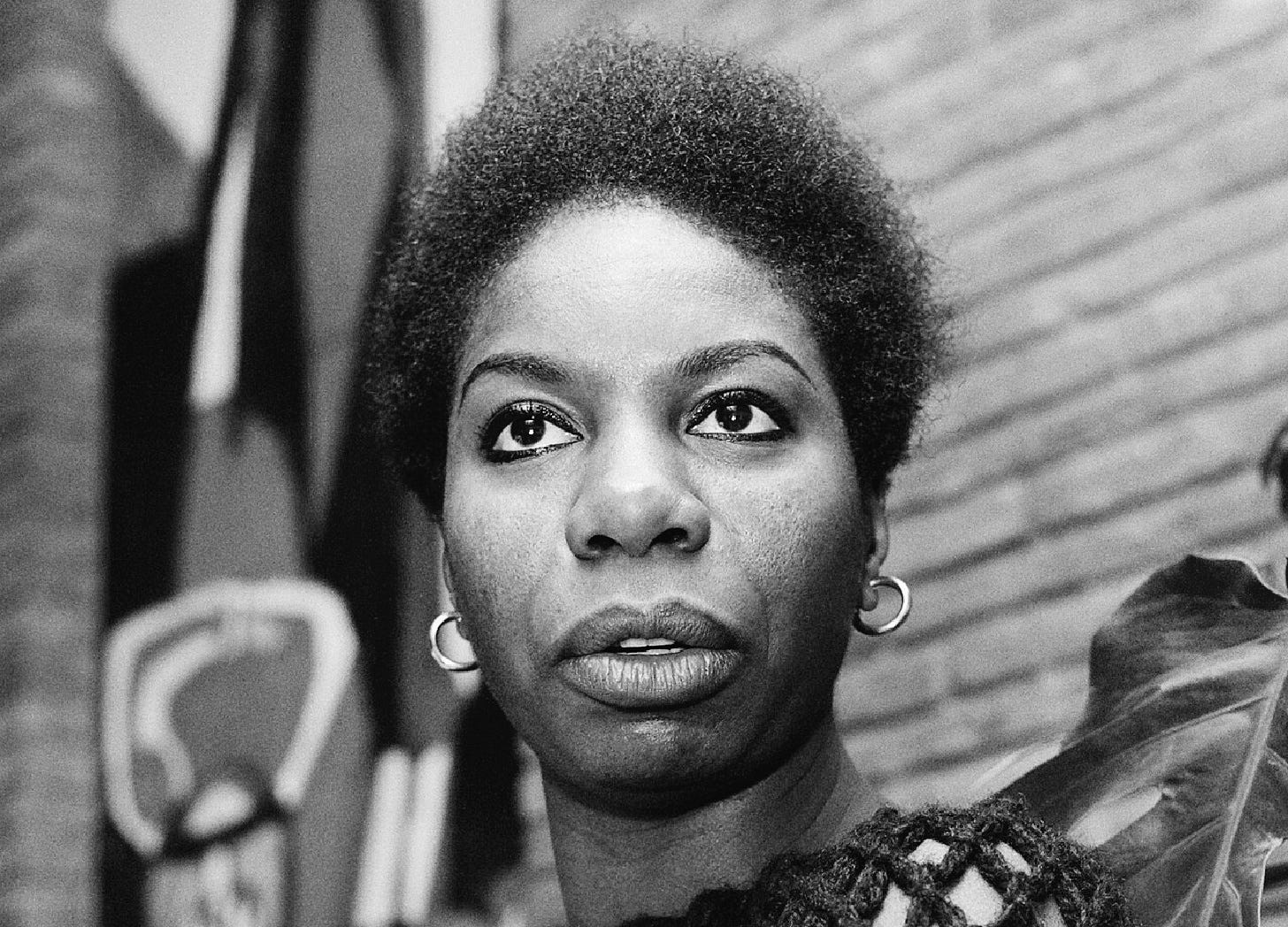
Nina Simone - and let’s be clear, she was already Nina Simone by this point, was a classically trained pianist who’d been rejected by the Curtis Institute (definitely not because of racism, they assured everyone), and a jazz singer who could make you weep with a ballad and then destroy you with Bach - Nina Simone sat down and wrote Mississippi Goddam in about an hour. An hour. She was so angry she couldn’t not write it, which is the only reason anyone should ever write anything.
Now here’s where it gets interesting, in that way that “interesting” is a completely inadequate word for what I’m describing. The song is structured as a show tune. It’s upbeat. It’s got a rhythm that could accompany a tap dance number. Simone performed it with a smile on her face, like she was doing a jaunty little number from a Broadway musical, except the lyrics are systematically dismantling every lie white America told itself about gradualism and progress and “wait your turn.” This wasn’t a protest as somber hymn. This was a protest as psychological warfare.
And white America, bless its heart (as they say in the South when they mean something else entirely), absolutely lost its mind. The song was banned across Southern states. Radio stations refused to play it. Simone’s record label got nervous. Because here’s what nobody wants to admit: America can tolerate protest songs about abstract injustice. What it cannot tolerate is specificity. What it really cannot tolerate is a Black woman refusing to be patient.
Mississippi Goddam was important in 1964 because it violated every unspoken rule about how Black artists (let alone WOMEN!) were supposed to voice discontent. You were supposed to be hopeful. You were supposed to believe in the arc of the moral universe bending toward justice (at a pace that wouldn’t inconvenience anyone). You were supposed to sing We Shall Overcome and mean it as a distant aspiration, not an immediate demand. Simone looked at that script and set it on fire, which is what you’d expect from someone who’d titled songs Four Women and would later record To Be Young, Gifted and Black.
The genius, and I’m using that word precisely, not hyperbolically, was that she weaponized everyone’s expectations. She gave them the music they wanted, the show tune structure, the entertainment, and then she made them choke on it. It’s the same energy as inviting someone to dinner and serving them a meal that forces them to confront exactly what they’ve been consuming all along without noticing.
Chuck Berry once said rock and roll was about three things: freedom, rebellion, and sex. Mississippi Goddam was about freedom and rebellion, but it replaced the sex with something far more threatening: memory. Simone wasn’t just protesting current conditions; she was creating a historical record that couldn’t be erased or softened later. She was saying, in effect, “I see exactly what you’re doing, I’m naming it, and I’m not letting you forget.”
Which brings us to why Mississippi Goddam is doubly important now, in this precise moment we’re occupying in 2026.
First, the obvious parallel: we’re still having the same argument. The names change, the headlines change, the specific incidents that spark national conversations change, but the underlying structure - violence against Black bodies, demands for patience, calls for civility, the insistence that protest be conducted in ways that don’t make anyone uncomfortable - remains depressingly consistent. If you could time-travel back to 1964 and play Simone a montage of contemporary discourse about police violence, voting rights, and “divisiveness,” she’d probably just nod and say, “Yes, that’s exactly what I was singing about.” The song hasn’t become dated; American racism has simply refused to evolve.
But here’s the deeper, more insidious reason the song matters now: we’ve gotten very good at neutralizing protest through acceptance. We’ve turned rebellion into content, revolution into aesthetic. You can buy a t-shirt with Angela Davis’s image at Target. Brands tweet about Black Lives Matter. It’s currently Black History Month, and the greed heads sitting in corporate board rooms will want to capitalize on Black money because money’s green, so it’s acceptable. We’ve created this mechanism where we acknowledge injustice, we consume the correct opinions about it, we stream the right protest music, and then we continue on exactly as before. It’s a kind of cultural embalming fluid that preserves the appearance of progress while killing the actual possibility of change.
Mississippi Goddam resists that neutralization because it’s so irreducibly angry. You can’t background-music it. You can’t turn it into an inspiring moment in a feel-good documentary about the Civil Rights Movement. Simone’s fury is right there in every note, undiminished by time, and it won’t let you off the hook by letting you feel good about acknowledging it exists. The song doesn’t want your approval; it wants your complicity examined.
Michael Eric Dyson wrote about how America prefers its Black prophets dead, how we lionize figures like Dr. King only after we’ve sanded down their radical edges and turned them into safe symbols of non-threatening change. Mississippi Goddam is the antidote to that sanitization. It reminds us that actual protest - not the performed, aestheticized version we’ve gotten comfortable with - is supposed to be uncomfortable. It’s supposed to make you squirm. It’s supposed to reject your timeline for other people’s freedom.
The song is also doubly important now because we’re living in an era of algorithmic everything, where engagement metrics determine what gets heard and what gets buried. Mississippi Goddam is a reminder that some things matter whether or not they trend, whether or not they’re optimized for shareability, whether or not they make anyone feel good. It’s a historical anchor that says, “This happened, it was wrong, and your discomfort with confronting it is vastly less important than the reality of what occurred.”
In 1964, Nina Simone wrote a song that was too angry, too direct, too uncompromising for the moment. Sixty-two years later, it’s still too angry, too direct, too uncompromising, which tells you everything you need to know about how little has fundamentally changed and how much we still need voices willing to burn down the polite fictions we construct around injustice.
Mississippi Goddam shouldn’t still be relevant. Its continuing relevance is its own indictment. Every time we find ourselves reaching for this song, every time its themes resonate with current events, we’re admitting a failure. We’re admitting that Nina Simone’s rage in 1964 was justified then and remains justified now, which means we’ve spent six decades proving her point.
That’s not a legacy anyone should be proud of. But it is the truth. And if nothing else, Mississippi Goddam demands we tell the truth, whether we’re ready for it or not.
Please consider subscribing to Jason Thompson's blogs:


Feel better Chris. Great idea to have Jason pinch hit. He knocked it out of the park as usual.
The SUPERMAJORITY PLAN TO IMPEACH TRUMP and HIS ADMINISTRATION
It will take 292 house and 67 senate votes to obtain a supermajority vote. This is the key to accomplishing anything in the house or senate. The house and senate will be able to impeach Trump and his administration for their crimes and corruption.
The Democrats are the only ones that will stand against Trump. We have to vote out as many republicans as possible.
EVERYONE IS GOING TO HAVE TO VOTE FOR DEMOCRATS IN THE NOVEMBER 3RD MIDTERM ELECTIONS TO MAKE THIS WORK
Make sure you share this with everyone you know without social media. People without social media are unaware how corrupt and detrimental Trump’s administration really is for our country. The media outlets do not post anything negative about Trump. Some people don’t even know what the midterm elections are or how important they are.
TRUMP, HIS ADMINISTRATION, HIS BILLIONAIRE PEDOPHILE NETWORK , AND THE REPUBLICAN PARTY ARE MAKING IT IMPOSSIBLE FOR THE WORKING CLASS TO SURVIVE.
WE HAVE TO STOP THEM FROM DESTROYING THE COUNTRY